CaseКейс
myreviews.ru
 Ruslan VelkoroРуслан Велкоро
Timeweb — the MyReviews startup for working with reviews Timeweb — стартап MyReviews по работе с отзывами
AboutО проекте
Timeweb is a large IT company with a startup division inside. One of its successful examples is MyReviews, a service for working with reviews. The service gathers reviews from every platform — Yandex, Google, Otzovik, ProDoctorov, T-Bank, Avito — into one dashboard, so that reputation is managed from a single window. Besides review collection, the service’s infrastructure includes a review widget, a QR code with a rating system and advanced analytics.Timeweb — крупная it-компания, внутри которой есть направление стартапов. Один из успешных примеров сервис MyReviews для работы с отзывами. Сервис собирает отзывы со всех площадок Яндекс, Google, Отзовик, ПроДокторов, Т-Банк, Авито в одну панель управления, чтобы управлять репутацией из одного окна. Кроме сбора отзывов, в инфраструктуре сервиса есть виджет отзывов, QR-код с системой рейтинга и расширенная аналитика.
TaskЗадача
Grow MRR and the number of paying users of the service, as well as conversions at the key stages of the funnel.Увеличить MRR и количество платных пользователей сервиса, а также конверсии на КЭВ.
When I joined the project, it had already been on the market for over a year. There was already a product, a site, a few successful articles and a small base of paying users.Когда я зашёл в проект, он уже существовал на рынке больше года. Уже есть продукт, сайт, несколько успешных статей и небольшая база платящих пользователей.
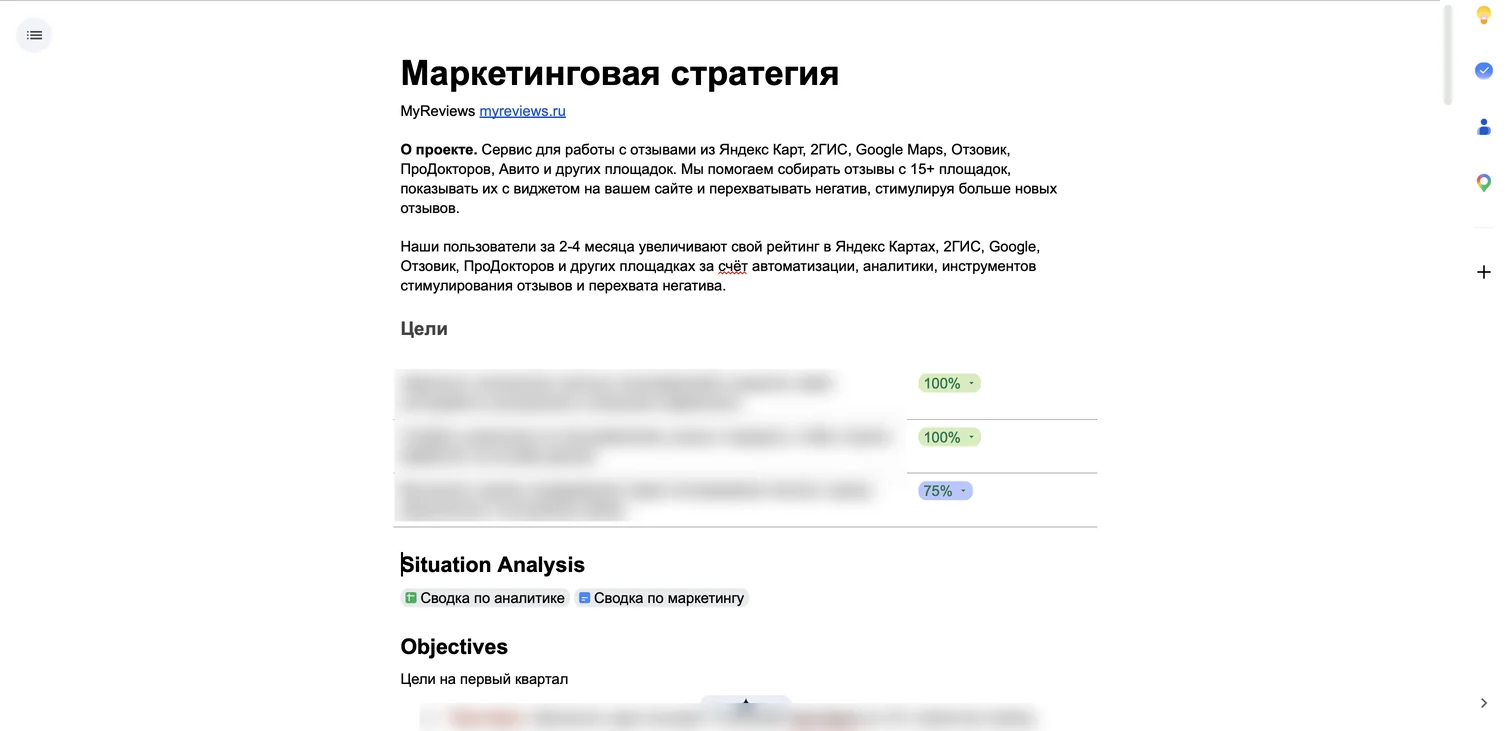
All of this needed a proper look. Put everything into numbers, measure it and build marketing channels to grow revenue. In the first 2 weeks I analysed the current results and turned them into a marketing strategy based on the SOSTAC model, split into stages and tools.В этом нужно хорошо разобраться. Всё оцифровать, замерить и выстроить маркетинговые каналы для роста выручки. За первые 2 недели проанализировал текущие результаты и собрал из них маркетинговую стратегию по модели SOSTAC, разбитую по этапам и инструментам.
We set priorities, split the channels into short-term and long-term ones and broke the goals down into steps. Among the directions we picked a few of the most promising for a SaaS service: SEO and link building, YouTube production and short-form video, webinars with partners and conversion improvements.Разложили приоритеты, сегментировали краткосрочные и долгосрочные каналы, разбили цели по шагам. Среди направлений выделили несколько самых перспективных для SaaS-сервиса: SEO и линкбилдинг, YouTube-продакшн и короткий контент, вебинары с партнёрами и доработка конверсий.
That is what we got down to.Этим и занялись.
Market and competitor analysisАнализ рынка и конкурентов
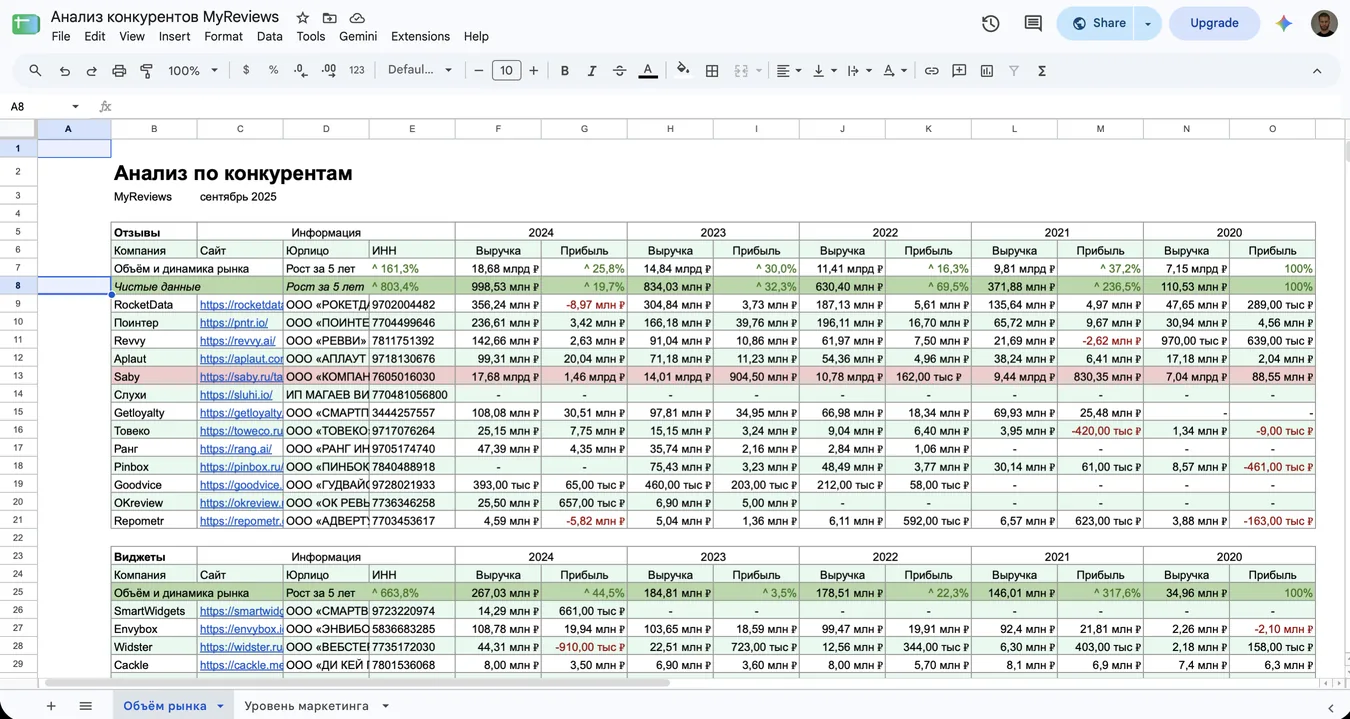
To build marketing on data, you need data. And not only on the product, but on the whole market. So alongside building lead generation, I launched an analysis of the market, its size and every competitor’s prices. Partly guerrilla-style: I booked meetings with all the competitors posing as a client and took apart their product, prices and offers — what they sell and for how much.Чтобы строить маркетинг на основе данных, нужны данные. И не только по продукту, а по всему рынку. Поэтому параллельно с выстраиванием лидогенерации запустил анализ рынка, его объёма и цен всех конкурентов. В том числе партизанским методом: назначал встречи со всеми конкурентами под видом клиента, разобрал их продукт, цены и коммерческие предложения — что предлагают и за какую стоимость продают.
Along the way I found many ways to stand apart from the competitors: on price (it is already in fact tens of times more affordable), a stronger offer and a different audience segment. The big players in the review management market worked with enterprise and sold expensive packages with a ticket of 300–400 thousand roubles a month. We were moving with SMBs and decided to keep going that way, but not to pass up big business either. By the way, over the time we worked, a large telecom operator came to us asking to build our infrastructure for them. And later there was also a large fast-food chain, but that’s another story.По ходу дела нашёл много способов отстроиться от конкурентов: за счёт цены (она уже фактически выгоднее в десятки раз), более сильного оффера и другого сегмента аудитории. Крупные игроки на рынке работы с отзывами работали с enterprise и продавали дорогие пакеты с чеком от 300–400 тысяч рублей в месяц. Мы же двигались с МСБ, решили так и продолжить, но крупный бизнес тоже не упускать. Тут, кстати, за время работы к нам пришёл крупный оператор связи с запросом выстроить под них нашу инфраструктуру. И потом был ещё один крупный фастфуд, но это другая история.
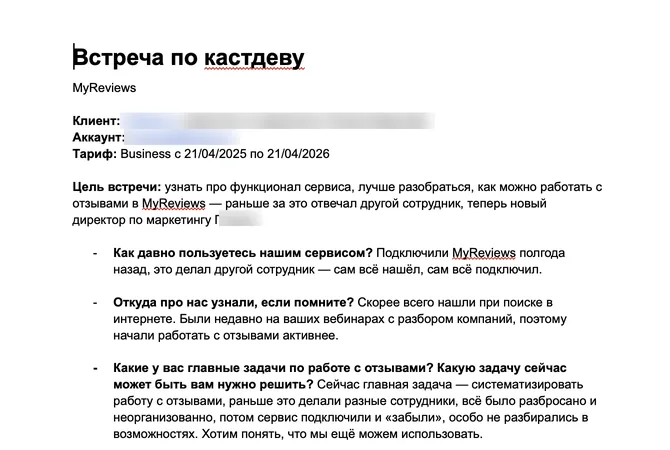
Alongside the analysis I launched custdev research to kill two birds with one stone: get material for client case studies and get inside the heads of those very clients. All of this took about a month, while we were already working with the lead generation channels. After the analysis, together with the CEO and the product manager, we drew many conclusions and applied them in the service: changed the positioning, the plan prices and the CJM logic.Вместе с анализом запустил в работу кастдев-исследование, чтобы убить двух зайцев: получить материал для кейсов клиентов и получить доступ к голове этих самых клиентов. На всё это ушло около месяца, при этом уже работали с каналами лидогенерации. После анализа вместе с CEO и продактом сделали много выводов, которые применили в сервисе: изменили позиционирование, стоимость тарифов и логику CJM.
SEO, GEO and link buildingSEO, GEO и линкбилдинг
We started writing articles for several resources, including our own site: for every hot and secondary keyword, putting out 2–3 articles a week. Not AI slop, but real articles. Alongside, we published on the Timeweb blog, where many authors write.Начали писать статьи на несколько ресурсов, в том числе на свой сайт: по всем горячим и дополнительным ключевым запросам, выпуская по 2–3 статьи в неделю. Не нейрослоп, а реальные статьи. Параллельно публиковались в блоге Timeweb, где пишут разные авторы.
Within the first month the articles were reaching the top 5 and top 10 in search. The reason: we picked keywords well and played with the formats that robots and LLMs love. For SEO and GEO at once.Уже в первый месяц статьи стали выходить в топ-5 и топ-10 поиска. Причина в том, что мы хорошо подбирали ключевые запросы и обыгрывали форматы, которые любят роботы и ллм-ки. Для SEO и для GEO сразу.
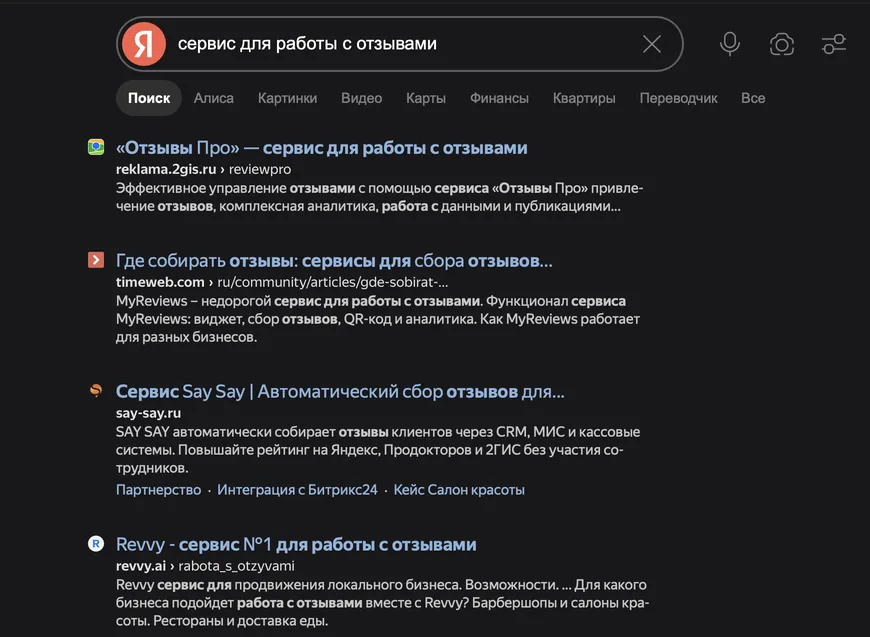

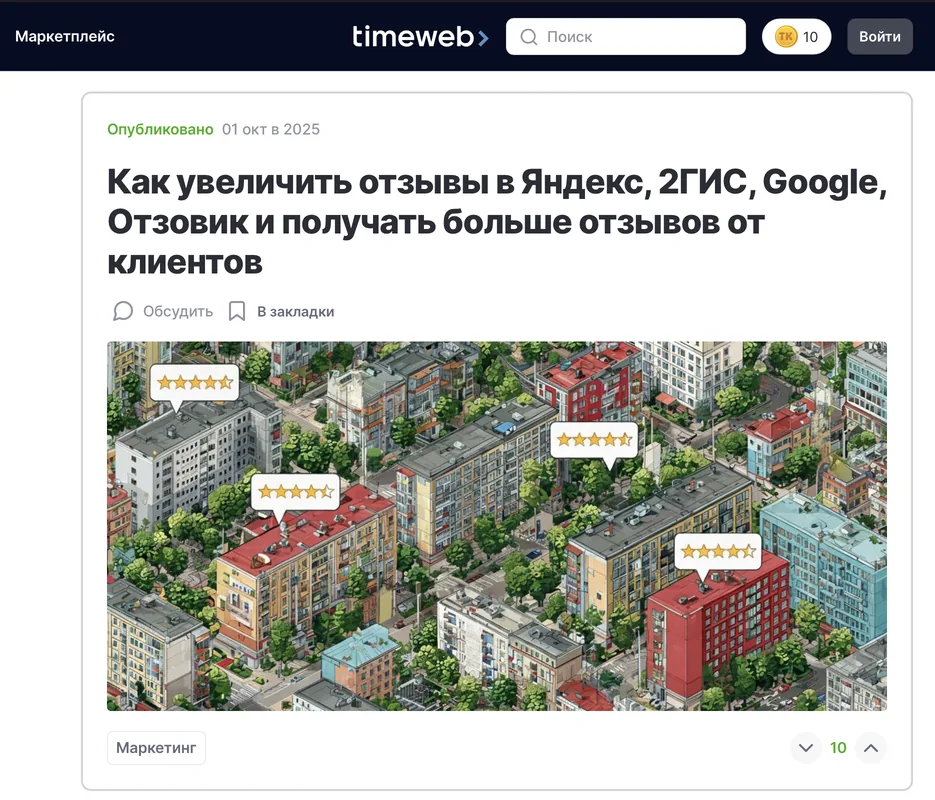
We also put link building to use: we placed links to our site on other resources to strengthen the domain rating. The higher it is, the better the site shows in search and the more willingly others link to it, neural networks included.Ещё заюзали линкбилдинг: вели ссылки на наш сайт с других ресурсов, чтобы укрепить доменный рейтинг. Чем он выше, тем лучше сайт показывается в поиске и тем охотнее на него ссылаются, в том числе нейросети.
I’ll say it straight: SEO brought the most tangible flow of clients within a few months. And the internet experts can keep saying it’s dead and doesn’t work.Скажу сразу, что SEO дал самый ощутимый приток клиентов за несколько месяцев. А эксперты из интернета пусть продолжают говорить, что оно умерло и не работает.
YouTube and short-form videoYouTube и короткий контент
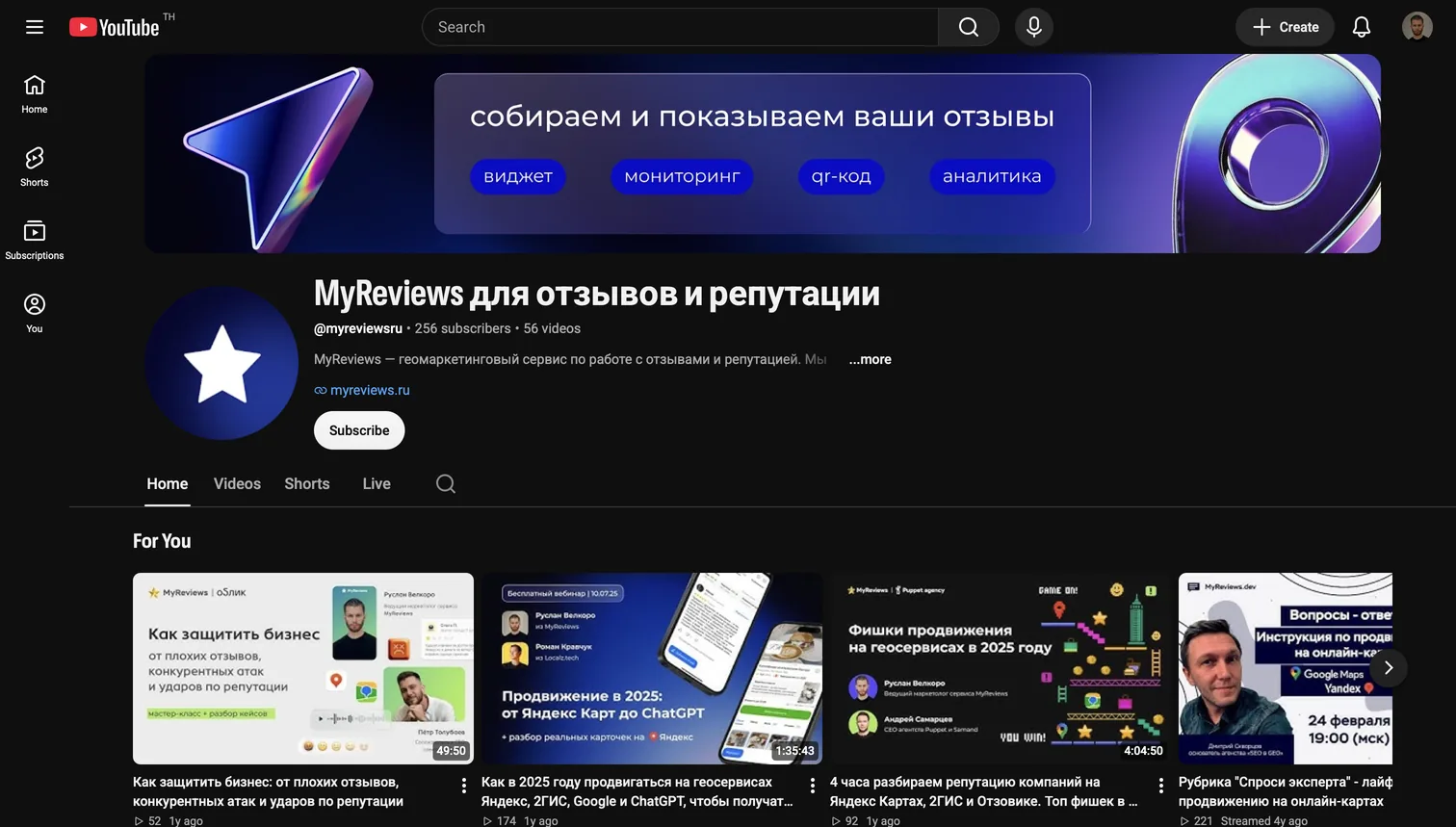
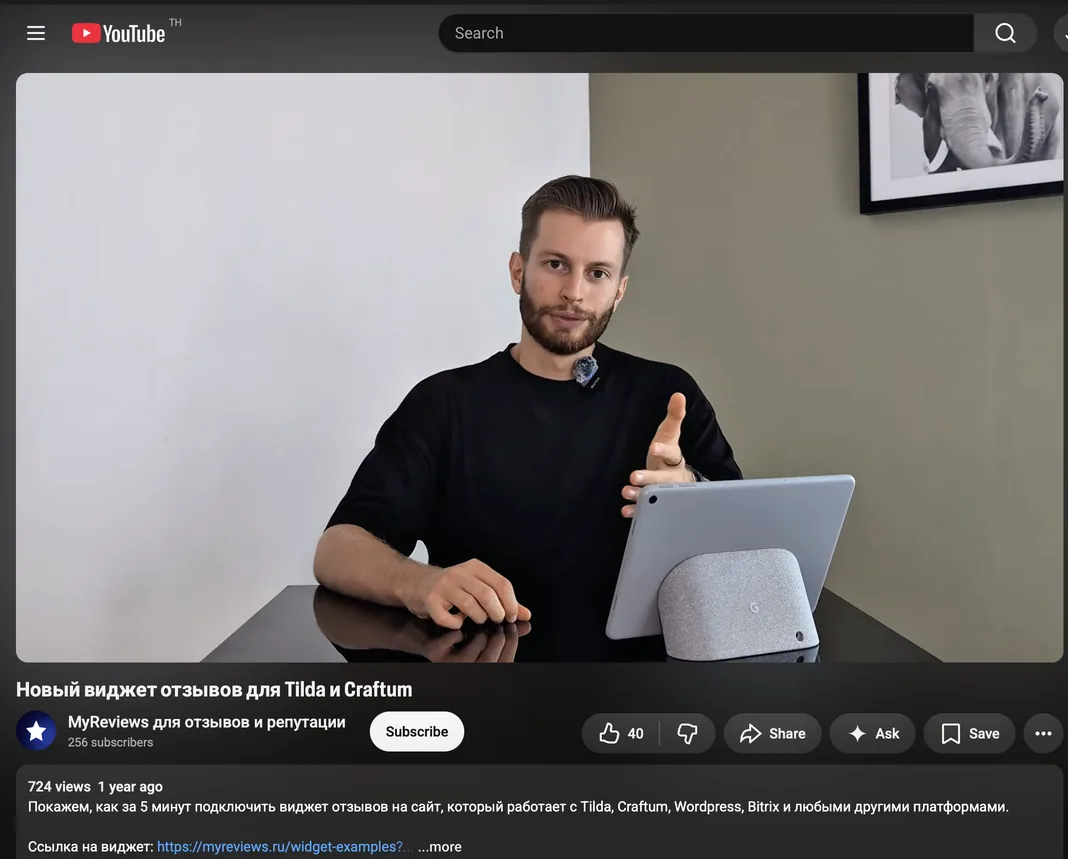
We drew up a list of key topics and started shooting videos for YouTube. We also wanted to capture search queries from there: YouTube shows up in search too and responds well to SEO.Собрали список важных тем и начали снимать видео для YouTube. Хотели забирать оттуда и поисковые запросы: YouTube тоже показывается в поиске и хорошо поддаётся SEO.
Honestly, this channel didn’t take off. One video, about the review widget, started showing up right in the search results and brought traffic and sign-ups. But overall there were few views.Честно скажу: этот канал сильно не пошёл. Одно видео про виджет отзывов начало появляться прямо в поисковой выдаче, и с него пошёл трафик и регистрации. Но в целом просмотров было немного.
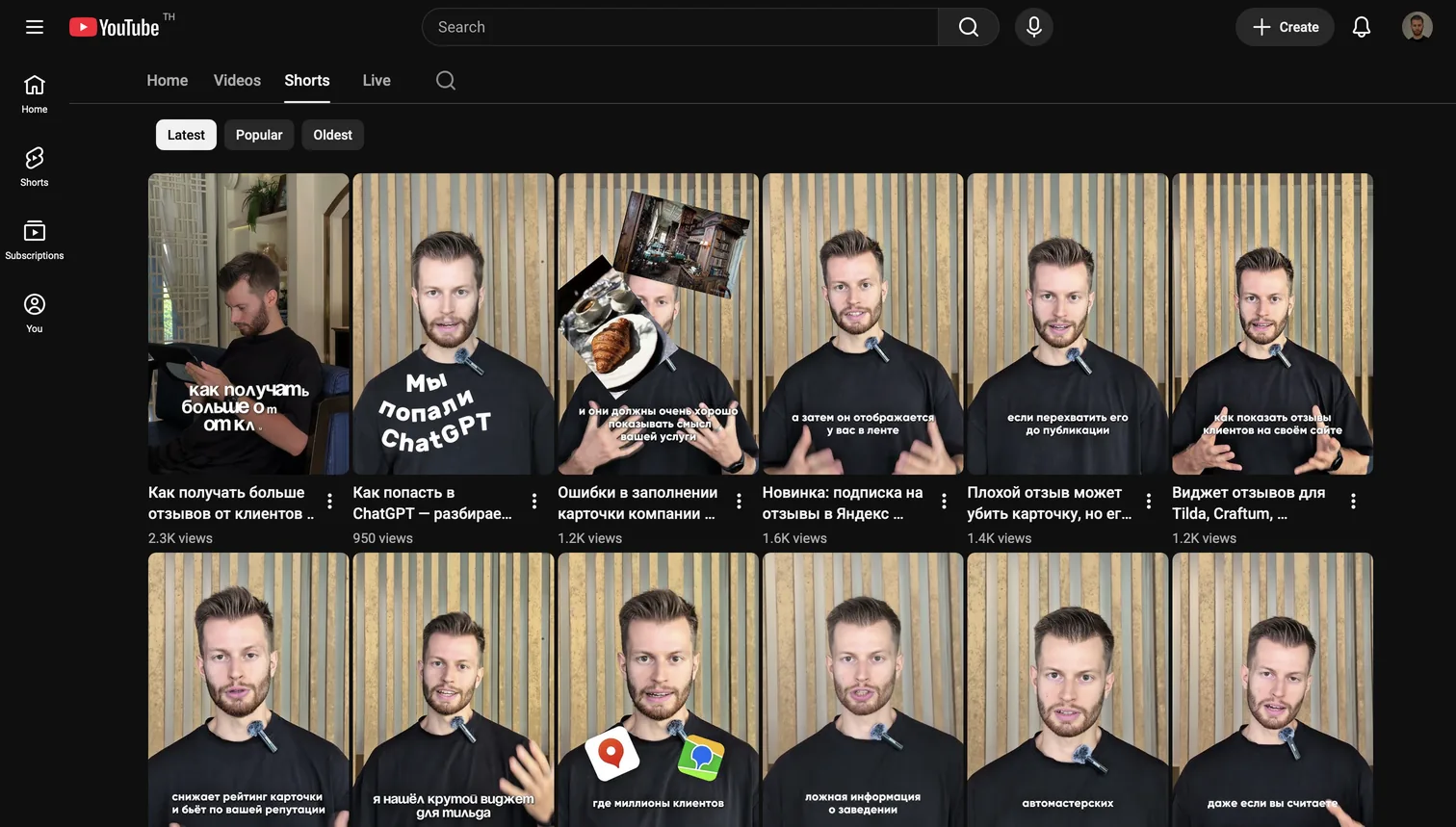
Short-form video worked much better. We built a strategy for it and set up a mini content factory: the videos went out on Reels and Shorts, each one steadily gathered 1–3 thousand views and brought sign-ups to the service.Гораздо успешнее сработал короткий контент. Мы выстроили под него стратегию и сделали мини контент-завод: ролики выходили в Reels и Shorts, каждый стабильно собирал 1–3 тысячи просмотров и приводил регистрации в сервис.
Webinars with partnersВебинары с партнёрами
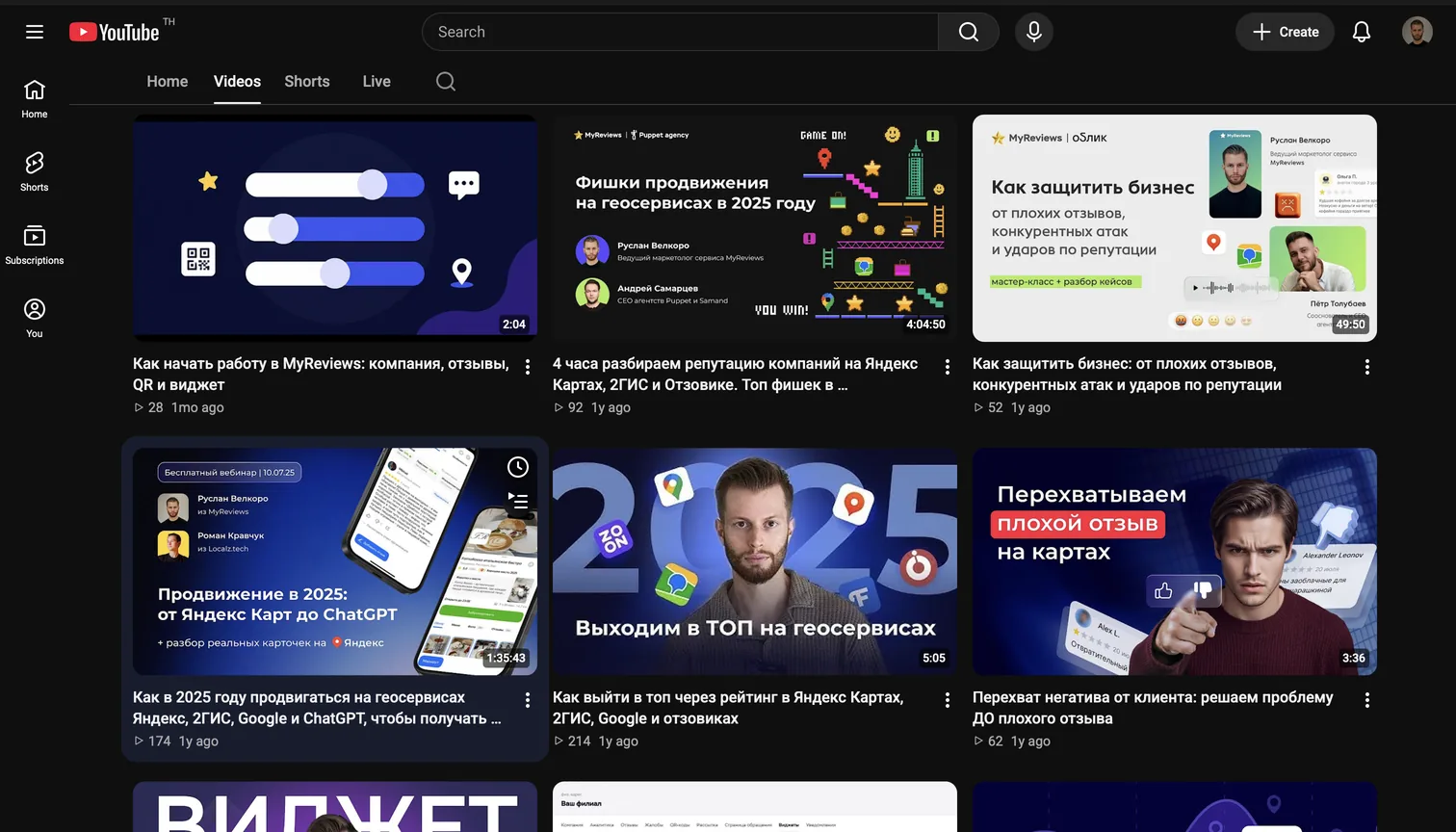
We launched webinars. We found several partners among agencies: especially those that manage companies’ online reputation and have plenty of clients of their own.Запустили направление вебинаров. Нашли несколько партнёров среди агентств: особенно среди тех, кто управляет репутацией компаний в интернете, и у кого много своих клиентов.
Together with the partners we ran webinars: how to boost marketing with reviews, how reviews affect sales, why customers read reviews before buying, how to work with them and how to manage reputation. Each live session drew 100–200 viewers and around 500 sign-ups. The traffic was mostly organic, with a little from Yandex Direct.Вместе с партнёрами стали проводить вебинары: как с помощью отзывов прокачать маркетинг, как отзывы влияют на продажи, почему клиенты читают отзывы перед покупкой, как с ними работать и как управлять репутацией. На каждый эфир собирали по 100–200 зрителей и около 500 регистраций. Трафик был в основном органический, немного добавляли из Яндекс.Директа.
Product improvementsДоработка продукта
The product itself matters just as much, because marketing always works at the junction of product and sales, affecting the company’s profit. Here we rebuilt the welcome sequence and the whole push system: mapped out how a person goes through onboarding after sign-up and at which moment to offer which product. We reworked the product pages of the site and put all 4 functions of the service on the first screen, so it is clear at once which tasks we solve.Ещё не менее важен сам продукт, потому что маркетинг всегда работает на стыке продукта и продаж, влияя на прибыль компании. Здесь мы пересобрали welcome-цепочку и всю систему пушей: прописали, как человек проходит онбординг после регистрации и в какой момент какой продукт ему предлагать. Доработали продуктовые страницы сайта и вынесли все 4 функции сервиса на первый экран, чтобы сразу было понятно, какие задачи мы решаем.
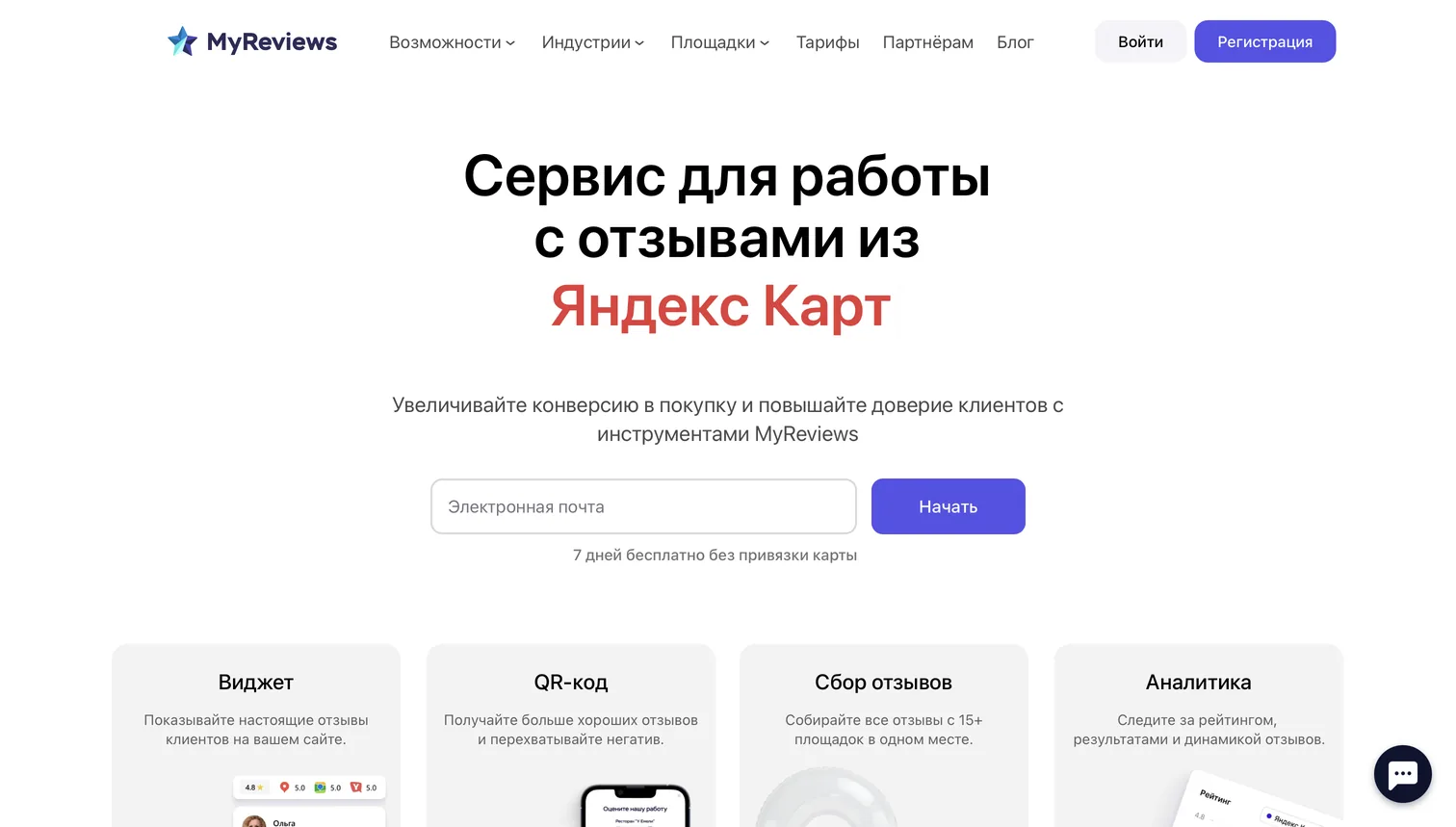
The updated pages raised the conversion to sign-up, and the welcome sequence and pushes raised the conversion to payment: it grew from 14 to 22%. And rebuilding the product and standing apart from the competitors raised the average ticket by 20%.Обновлённые страницы подняли конверсию в регистрацию, а welcome-цепочка и пуши — конверсию в оплату: она выросла с 14 до 22%. А пересборка продукта и отстройка от конкурентов увеличили средний чек на 20%.
ResultsРезультаты
+30%+30%MRR and paying users of the serviceMRR и платные пользователи сервиса14 → 22%14 → 22%conversion to paymentконверсия в оплату+20%+20%average ticket after rebuilding the productсредний чек после пересборки продуктаIn the end we grew MRR and the number of paying users of the service by 30%, getting the bigger result through SEO/GEO, the affiliate programme, plus content marketing and a webinar funnel run in collaborations.В итоге мы увеличили MRR и количество платных пользователей сервиса на 30%, получив больший результат через SEO/GEO, партнёрку, плюс контент-маркетинг и вебинарную воронку в коллаборациях.
Reviews work.Отзывы работают.